
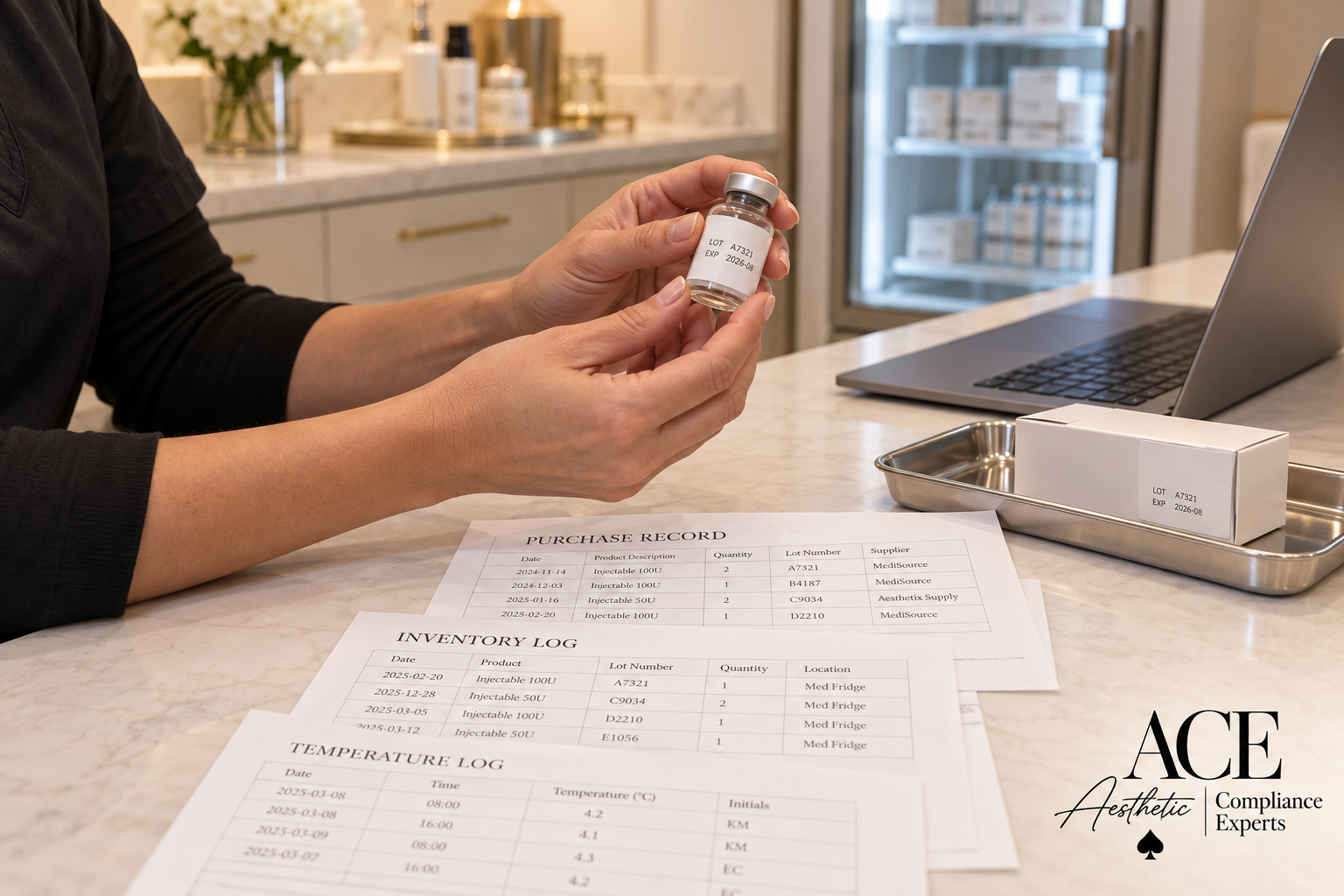
On October 8, 2026, the CDC published a report on an unapproved toxin product given at a medical spa in Colorado. It's a public health report, not law, but it points straight at paperwork every injecting clinic already keeps.
By Amber Bechthold, Founder & CEO of Aesthetic Compliance Experts · Esthetician with 25 years in medicine and aesthetics · Last reviewed October 28, 2026
Key Facts at a Glance
Status: Public health report · not a law change
Published by: the CDC, in its Morbidity and Mortality Weekly Report
Published: October 8, 2026
Where it happened: a medical spa in Colorado
What it's about: an unapproved botulinum toxin product bought online
Who it's for: owners, injectors and medical directors in every state
What the CDC Reported
Three patients got sick after a Colorado med spa injected a toxin product.
Bought online: the provider said the toxin came from an online supplier.
Not FDA-approved: the patients did not know the product was unapproved.
Symptoms: weakness, numbness, blurred vision and trouble speaking.
What inspectors found: single-dose vials used on more than one patient, a diluent with preservative used the wrong way, temperature checks not kept up, and mixed toxin with no label, used past its date.
What the state did: Colorado ordered the provider to stop using the product, and a complaint was filed with the state licensing agency.
What the Report Doesn't Say
It does not name the spa or the product brand.
The lot given to patients was not tested.
It does not say for sure what caused the symptoms.
Why This Matters in a Med Spa
A report like this is a reason to look, not a reason to worry. Most clinics already keep invoices, treatment notes and a fridge log. Lining them up so they tell one clear story about each vial is a short project.
Frequently Asked Questions
Did a law change because of this report?
No. This is a public health report from the CDC, not a new law or rule.
Was the toxin FDA-approved?
No. The CDC reported the product was not FDA-approved and was bought from an online supplier.
How do I report a reaction to a toxin product?
Through FDA MedWatch.
Sources
What This Means for Your Clinic
This applies in every state. Line up four records first:
An invoice for every toxin vial showing it is FDA-approved and came from an authorized U.S. distributor.
The lot number in every treatment record.
A temperature log for your toxin fridge, filled in every day.
A toxin SOP that covers single-dose vials, diluent, labels and use-by times.
Then work through the rest:
Match every vial on your shelf to an invoice from an authorized source.
File invoices by lot so you can find where each lot was bought.
Spot-check treatment records to confirm the lot number is written in each one.
Review last month's fridge log and note any missing days.
Update your toxin SOP so it matches what your team does.
Train your team to report reactions through FDA MedWatch, and keep a signed training record.
Write down your adverse event reporting steps so anyone on shift can follow them.
For how this applies to your own clinic, ask your medical director, your attorney or your state medical or nursing board.
Need a legal answer for your clinic?

ACE works with Doris Dike, Esq., founder of Dike Law Group PLLC, our outside legal counsel. If you need an attorney to look at how this applies to your clinic, her office can help.
Phone: (972) 290-1031
Office: 6160 Warren Parkway, Suite 100, Frisco, TX 75034
Book a call: dklawg.com/contact
Have questions about how this applies to your clinic? Book a free 30-minute Gap Analysis Call or text us anytime at (817) 442-7484.
This post is educational. It is not legal advice, and requirements differ by state and by practice. Confirm how any change applies to your clinic with your own attorney or your licensing board.
